Hermeneutics

  • Getting Started
  • Resources
  • Tutorials
Menu
  • 1. Introduction
  • 2. Meaning Matters
  • 3. Genres
    • Narratives
    • Law
    • Psalms
    • Prophecy
    • Wisdom
    • Gospels
    • Parables
    • Acts
    • Epistles
    • Revelation
  • 4. Making Observations
  • 5. Application
  • 6. Putting it All Together
  • Bibliography

Parables

Purpose of Parables

  • To CONCEAL truth to those with hardened hearts
  • To REVEAL truth to those whose hearts are opened

Sequence for Interpreting Parables

One: Determine where it falls on the “Allegorical Continuum”Allegorical Continuum
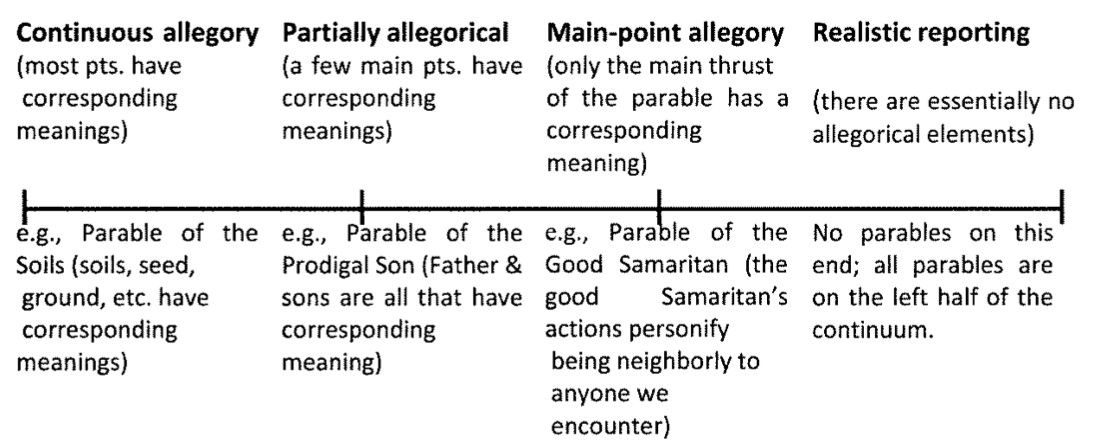
Two: From the parable’s setting within Jesus’ ministry and within the gospel’s structure, determine if the parable…

  • Answers a question (who is my neighbor?)
  • Addresses a concern (Jesus’ relationship with sinners)Clarifies new teaching (the unexpected form of the kingdom of God)

Three: Be sensitive to historical and cultural features that heighten the parables impact on its original hearers

  • For example, the Jew’s view of samaritans for the good samaritan
  • Background info is highly significant

Four: Determine the theological significance of the parable and draw applications that (culturally) parallel the impact on the original hearers.

Luke 16:1-13 Example

For a detailed write up on interpreting a parable, please see "Meditative Hermeneutics on Luke 16:1-13"

Information taken from:

Notes from Russell lecture
Introduction to Biblial Interpretation by KBH